The Software Development Life Cycle: What Every Business Leader Should Know
Software is no longer just a technical concern — it is a business asset. Yet for many stakeholders, the process behind building that asset remains a mystery. What does a development team actually do between the moment an idea is approved and the day it goes live? The answer lies in the Software Development Life Cycle, or SDLC.
Understanding the SDLC is not about learning to code. It is about making better decisions, setting realistic expectations, and protecting your organisation's investment.
What Is the SDLC?
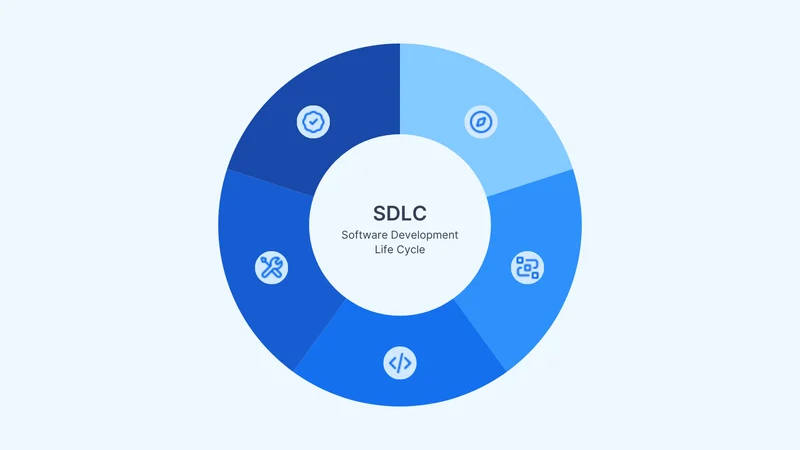
The SDLC is a structured process that guides how software is planned, built, tested, deployed, and maintained. Think of it as the blueprint that keeps a complex project from becoming chaos.
Depending on the organisation, two methodologies are commonly applied: Waterfall, which follows a sequential, phase-by-phase approach ideal for well-defined requirements; and Agile/Scrum, which delivers work in short, iterative cycles — allowing priorities to shift as the business evolves. Many organisations adopt a hybrid of both.
Phase 1: Planning & Requirements
This is where every successful project begins — and where every failed project goes wrong.
Before a single line of code is written, the development team works with stakeholders to answer critical questions: What problem are we solving? Who is the end user? What does "done" actually look like?
This phase produces a clear requirements document — the contract between business and technology. Vague requirements at this stage translate directly into cost overruns, missed deadlines, and products that miss the mark. Investing time here is the single highest-return activity in the entire SDLC.
Phase 2: Design & Development
With requirements confirmed, engineers design the system architecture and begin building. This is where technical decisions are made about how the software will perform, scale, and integrate with existing tools.
From a business perspective, this phase demands patience and trust. Progress may not be immediately visible, but the work being done here determines how reliable and maintainable the software will be for years to come.
Phase 3: Testing & Quality Assurance
Testing is not a formality — it is a risk management strategy.
Before any software reaches your customers or internal teams, it must be rigorously tested for defects, performance issues, and security vulnerabilities. A bug caught during testing costs a fraction of what it costs to fix after release. A breach or system failure post-launch can cost far more than money — it can cost customer trust.
Quality Assurance teams do not slow projects down. They protect the business from shipping problems disguised as solutions.
Phase 4: Deployment & Release
Deployment is the moment software moves from the development environment to the real world. In modern engineering, this is rarely a single dramatic event — it is a carefully managed process.
Using practices from DevOps and Continuous Integration/Continuous Deployment (CI/CD), teams can release software incrementally, monitor its performance in real time, and roll back changes quickly if something goes wrong. For business leaders, this means reduced risk and faster time-to-value.
A well-planned deployment includes communication to end users, training where necessary, and a clear escalation path if issues arise.
Phase 5: Maintenance & Support
Software is not a one-time delivery. It is a living system.
After release, teams continue monitoring performance, addressing bugs, applying security updates, and implementing improvements based on user feedback. This ongoing investment is what keeps software secure, competitive, and aligned with a changing business environment.
Organisations that treat maintenance as an afterthought often find themselves managing technical debt — a growing backlog of deferred work that compounds over time and eventually demands a costly rewrite.
Why This Matters to You
Every decision made in the SDLC has a business consequence. Skipping the planning phase affects timelines. Cutting testing affects quality. Neglecting maintenance affects security.
When business leaders understand the life cycle — not in technical detail, but in principle — they become better partners to their engineering teams. They ask the right questions, allocate resources more effectively, and set expectations that lead to outcomes rather than disappointment.
Software development is a discipline. Treated as one, it delivers. Treated as a black box, it surprises — rarely in the ways you would hope.
Written from experience in the field, this article reflects real-world software engineering practice across Waterfall and Agile environments.