Have you ever clicked on a website link and waited… and waited… and then left? You already understand Core Web Vitals. You just didn't know the name.
Google formalized what users have always felt intuitively: speed, responsiveness, and visual stability are not nice-to-haves. They are the product. In 2021, Google made Core Web Vitals an official ranking signal. But even if search rankings didn't exist, these metrics would still matter — because users vote with the back button.
So what is Core Web Vitals?
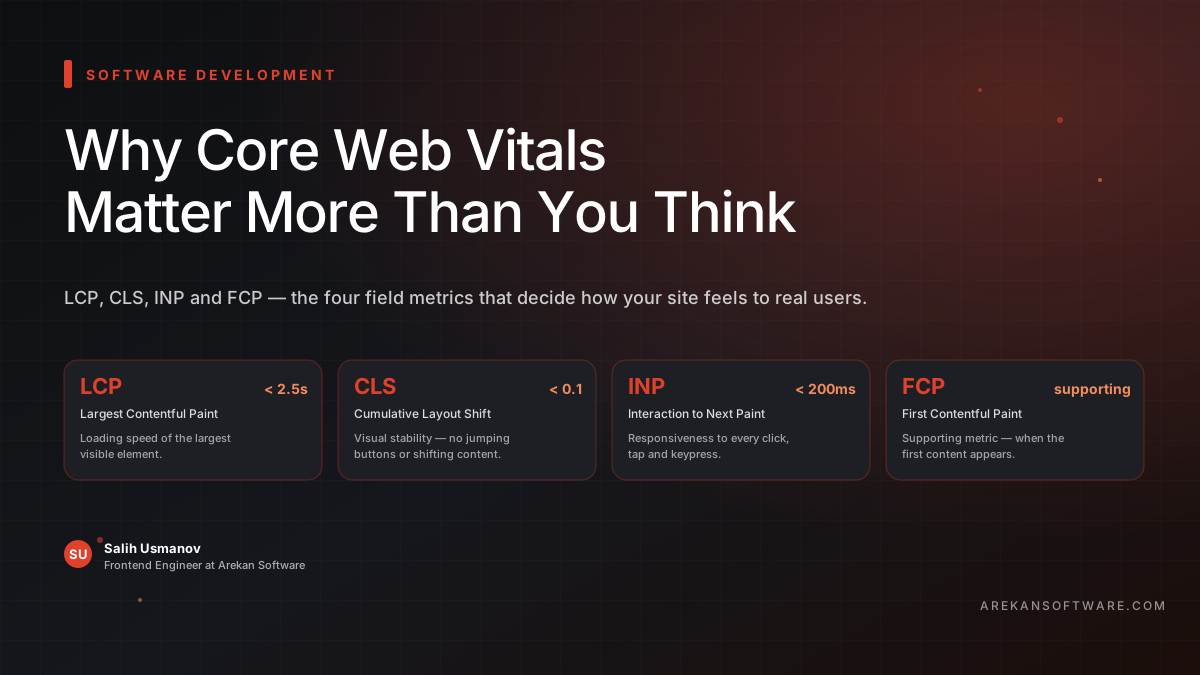
Core Web Vitals are a set of three (now four) real-world performance metrics that measure how a page actually feels to use — not just how fast it loads in a lab.
Largest Contentful Paint (LCP) measures loading performance — specifically, how long it takes for the largest visible element (a hero image, a headline) to render. Google's target: under 2.5 seconds.
Cumulative Layout Shift (CLS) measures visual stability. Ever tried to click a button and the page jumped, making you tap the wrong thing? That's a CLS problem. Target: below 0.1.
Interaction to Next Paint (INP) — the newest Core Vital, replacing First Input Delay — measures overall responsiveness. It tracks how quickly the page responds to every click, tap, or keypress throughout a session. Target: under 200ms.
First Contentful Paint (FCP) is a supporting metric that tracks when the first piece of content appears on screen, giving users a signal that something is happening.
Why Developers Underestimate Them
Performance metrics tend to look fine in development. Your localhost is fast. Your test machine has 16GB of RAM. Your network is a fiber connection.
Real users are on 4G in a moving car. They're on a mid-range Android from 2021. They're loading your page while five other tabs are open.
Core Web Vitals are measured in the field, from real Chrome users — not in artificial lab conditions. That's what makes them honest.
Why It Matters for Your Business
The data is relentless on this:
Walmart found that for every 1 second of improvement in page load time, conversions increased by 2%.
Pinterest reduced perceived wait times by 40% and saw a 15% increase in sign-ups.
BBC found they lost an additional 10% of users for every extra second their site took to load.
A bad CLS score doesn't just annoy users — it costs money. A high LCP doesn't just hurt rankings — it hurts trust. Users associate slow performance with low quality, even subconsciously.
Good for Google, Good for Users
Core Web Vitals are a rare case where what's good for Google is genuinely good for users. Fast pages convert better. Stable pages feel more trustworthy. Responsive pages feel like quality software.
You don't optimize for the score. You optimize for the person on the other side of the screen — the score just tells you how well you're doing it.
Struggling with Your Core Web Vitals Scores?
At Arekan, we've helped businesses turn sluggish, underperforming sites into fast, conversion-ready experiences. Whether it's a poor LCP dragging down your rankings or layout shifts frustrating your users, our team knows exactly where to look and what to fix.
Let's make your site something users actually enjoy loading.
Author: Salih Usmanov, Frontend Engineer.